
Floating Shelves Kitchen: The Ultimate Guide to Open Storage
Transform your kitchen with stylish, functional floating shelves. Learn how to choose, install, and style open shelving for a beautiful and organized space.
START EXPLORINGWhy Floating Shelves? Floating shelves are a game-changer for kitchen design. They open up your space, showcase your favorite dishware, and provide easy access to everyday items. Whether you're aiming for a modern minimalist look or a cozy farmhouse vibe, floating shelves can be tailored to match your style and storage needs.
What Are Floating Shelves and Why Choose Them?
Floating shelves are a sleek, modern storage solution that appears to "float" on your wall without visible brackets. Unlike traditional wall cabinets, they create an open, airy feel that makes even small kitchens feel more spacious. They are perfect for displaying glassware, spices, cookbooks, and decorative items while keeping your most-used items within arm's reach.
In recent years, floating shelves have become a staple in kitchen design. They break up the monotony of solid cabinetry, add visual interest, and allow you to personalize your kitchen with ease. Whether you're remodeling a small kitchen or updating a spacious one, floating shelves offer a versatile and stylish storage option that complements any decor.
One of the biggest advantages of floating shelves is their ability to reduce visual clutter. By keeping items visible and organized, you're more likely to maintain a tidy space. They also eliminate the heavy, boxy look of traditional upper cabinets, making your kitchen feel more open and inviting. If you're considering a kitchen renovation, floating shelves are a design element worth exploring.
Types of Floating Shelves for Your Kitchen
Floating shelves come in various styles, materials, and configurations. Understanding the different types will help you choose the best option for your kitchen's layout and aesthetic.
1. Wood Floating Shelves
Wood floating shelves are a classic choice that adds warmth and natural beauty to any kitchen. They pair well with wood kitchen cabinets and white oak kitchen cabinets. Popular wood species include oak, walnut, and maple. These shelves can be stained or painted to match your existing decor. For a cohesive look, consider matching your floating shelves to your shaker style cabinets or modern kitchen cupboards.
2. Metal Floating Shelves
Metal floating shelves offer a sleek, industrial look. They are durable and easy to clean, making them ideal for busy kitchens. If your kitchen features industrial kitchen cabinets, metal shelves can enhance the overall aesthetic. They are also a great choice for stainless steel pots and pans storage.
3. Glass Floating Shelves
Glass floating shelves create a minimalist, contemporary feel. They are perfect for displaying delicate items and can make a small kitchen feel larger. However, they require more frequent cleaning to keep them looking their best. Glass shelves work well with modern kitchen cupboards and black kitchen cupboards.
4. Corner Floating Shelves
Corner floating shelves maximize storage in unused corners of your kitchen. They are perfect for organizing pantries or displaying spices. If you have a galley kitchen, corner shelves can be a lifesaver for extra storage.
5. Floating Shelves with Hooks
Some floating shelves come with built-in hooks, allowing you to hang mugs, utensils, or small pans. This is a great option for small kitchen cabinets where space is at a premium. They add functionality without sacrificing style.
Materials and Finishes: What to Look For
The material and finish of your floating shelves play a crucial role in their durability and appearance. Here's what you need to know:
Solid Wood
Solid wood shelves are durable, long-lasting, and add a premium look to your kitchen. They can be sanded and refinished if they get damaged. However, they are heavier and may require more robust installation. For a cohesive design, pair solid wood shelves with walnut kitchen cabinets or teak kitchen cabinets.
Plywood
Plywood shelves are a more affordable alternative to solid wood. They are strong and stable, but the edges need to be finished with edge banding. If you're using plywood cabinet boxes, plywood shelves can match perfectly.
MDF (Medium-Density Fiberboard)
MDF shelves are smooth, uniform, and easy to paint. They are a popular choice for painted shelves. However, they are not as moisture-resistant as wood or plywood, so they should be avoided in areas with high humidity.
Metal
Metal shelves are sturdy, easy to clean, and resistant to moisture. They are ideal for industrial kitchen cabinets and modern designs. Stainless steel and aluminum are common options.
Finishes
Finishes can dramatically change the look of your shelves. Painted shelves offer a pop of color, while stained shelves highlight the natural grain of the wood. For a natural look, consider unfinished cabinets and apply your own finish. Regular wood polishing can keep your wooden shelves looking new.
How to Install Floating Shelves: A Step-by-Step Guide
Installing floating shelves may seem daunting, but with the right tools and a bit of patience, it's a manageable DIY project. Here's a comprehensive guide:
Tools and Materials Needed
- Floating shelves (with hidden brackets)
- Drill and drill bits
- Stud finder
- Level
- Measuring tape
- Pencil
- Screws and wall anchors (if not included)
- Hammer
- Screwdriver
Step 1: Plan Your Layout
Decide where you want to install your shelves. Consider the height, spacing, and alignment. Use a pencil to mark the desired positions. Ensure the shelves are within reach and don't interfere with cabinet appliance clearance.
Step 2: Locate Studs
Use a stud finder to locate the studs in your wall. Mark them with a pencil. If studs are not available, use heavy-duty wall anchors. For more details, refer to our cabinet wall anchors guide.
Step 3: Install the Brackets
Floating shelves typically come with hidden brackets that attach to the wall. Secure the brackets to the studs using screws. Make sure they are level. For a comprehensive installation guide, check our cabinet installation guide.
Step 4: Slide the Shelf On
Slide the shelf onto the brackets. Some shelves have a locking mechanism to secure them in place. Follow the manufacturer's instructions.
Step 5: Check for Level
Use a level to ensure the shelf is straight. Adjust if necessary. For tips on leveling, see our cabinet leveling guide.
Step 6: Secure and Finish
Once the shelf is level, secure it according to the manufacturer's instructions. If you're using cabinet shims, place them as needed. For screw types, refer to our cabinet screw types guide.
If you're not confident in your DIY skills, consider hiring a professional. Our kitchen remodel contractors guide can help you find the right expert.
Styling Your Floating Shelves: Design Ideas and Inspiration
Floating shelves are not just for storage—they are a design statement. Here are some inspiring ideas to make the most of your shelves:
1. Create a Coffee Station
Dedicate a section of your floating shelves to a coffee station. Store mugs, coffee beans, and a French press. This keeps your countertops clutter-free and adds a cozy touch. Pair with countertop convection ovens for a complete breakfast nook.
2. Display Cookbooks and Spices
Arrange cookbooks vertically and use small jars for spices. This not only looks organized but also makes your favorite recipes easily accessible. For more pantry organization tips, see our organizing pantry guide.
3. Showcase Glassware and Dishware
If you have beautiful glassware or china cabinet pieces, floating shelves are the perfect place to display them. They add elegance and make your kitchen feel more personalized.
4. Mix and Match
Combine different materials, heights, and objects. For example, place a small plant next to a stack of bowls and a framed photo. This eclectic approach adds character. If you have a breakfast bar, floating shelves above it can create a stunning focal point.
5. Use Baskets and Bins
Incorporate baskets or bins to hide less attractive items. This keeps your shelves looking tidy while maximizing storage. For more storage ideas, explore our storage cabinets and stackable plastic drawers.
6. Add Lighting
Install under-cabinet lighting or cabinet puck lights beneath your floating shelves to highlight your display and add ambiance. For a modern touch, consider LED strip lighting for cabinets.
Floating Shelves vs. Traditional Cabinets: Which Is Right for You?
Deciding between floating shelves and traditional cabinets depends on your storage needs, kitchen layout, and design preferences. Here's a comparison to help you decide:
| Feature | Floating Shelves | Traditional Cabinets |
|---|---|---|
| Storage Capacity | Limited; best for display and frequently used items | High; can store large quantities of items out of sight |
| Aesthetic | Open, airy, modern | Enclosed, traditional, can feel bulky |
| Maintenance | Requires regular dusting and organization | Less dust accumulation; items hidden |
| Cost | $50–$300 per shelf (depending on material) | $100–$500+ per cabinet |
| Installation | Moderate DIY difficulty | Can be complex; often requires professionals |
| Best For | Small kitchens, modern designs, display | Large kitchens, heavy storage, traditional designs |
Many homeowners choose a hybrid approach: using floating shelves for display and open storage, while relying on shaker style cabinets or black kitchen cupboards for concealed storage. This balance offers both style and functionality.
Care and Maintenance Tips for Floating Shelves
To keep your floating shelves looking beautiful for years, follow these simple care tips:
- Dust regularly: Use a microfiber cloth to remove dust. For detailed cleaning, refer to our cabinet surface cleaning guide.
- Avoid excessive moisture: Wipe up spills immediately to prevent damage, especially on wood shelves. See our liquid spill cleanup tips.
- Use coasters and liners: Place coasters under plants and use cabinet shelf liner installation to protect the surface.
- Check hardware: Periodically tighten screws and check brackets. If you notice any issues, consult our cabinet hinge repair or cabinet drawer slide repair guides.
- Polish wood: For wooden shelves, regular wood polishing can maintain their luster.
- Protect from sunlight: Prolonged sun exposure can fade finishes. Consider cabinet sun fade protection.
Common Mistakes to Avoid with Floating Shelves
Avoid these common pitfalls to ensure your floating shelves are both functional and beautiful:
- Overloading shelves: Exceeding weight limits can cause sagging or collapse. Distribute weight evenly and avoid heavy items on small shelves.
- Incorrect installation: Not anchoring into studs or using inadequate anchors can lead to failure. Always follow installation guidelines and use appropriate cabinet wall anchors.
- Poor spacing: Shelves placed too far apart or too close together can look awkward. Plan your layout carefully.
- Ignoring humidity: In humid areas, choose moisture-resistant materials. Consider cabinet humidity control measures.
- Cluttered displays: Keep shelves organized and uncluttered. Use baskets and bins to corral small items.
- Not leveling: An unlevel shelf is an eyesore. Always use a level during installation.
By avoiding these mistakes, you'll enjoy a beautiful and functional floating shelf display for years to come.
Recommended Floating Shelves for Your Kitchen
⚠️ AFFILIATE DISCLOSURE: This website contains affiliate links. As an affiliate Associate, we earn from qualifying purchases. If you make a purchase through these links, we may receive a small commission at no additional cost to you. Read our full affiliate policy.

BAYKA Rustic Brown Floating Shelves 22.5in, Set of 2, Wall Mount Wood Shelf
Check price on Amazon
BAYKA Rustic Brown Bathroom Floating Shelves, 15.7in, 3Pk, Wall Mount Shelf
Check price on Amazon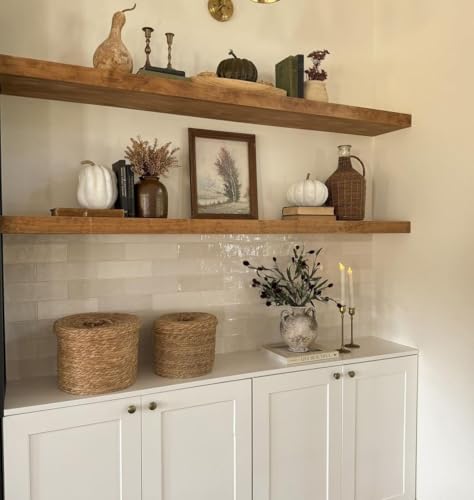
ROGMARS 36 Inches Long Walnut Floating Shelves
Check price on Amazon
WOPITUES Floating Shelves Set of 6 for Wall Decor & Storage, Rustic Brown
Check price on Amazon
BAYKA Black Floating Shelves 15.7in, Set of 3, Wall Mount Rustic Wood Shelf
Check price on Amazon
Amada 15.7" Floating Shelves for Wall Decor & Storage, Set of 3, White
Check price on Amazon
QEEIG Bathroom Floating Shelves for Wall (Brown, Set of 2, 15.7")
Check price on AmazonFrequently Asked Questions About Floating Shelves
How much weight can floating shelves hold?
Weight capacity varies by shelf and installation. Most floating shelves can hold 20–50 pounds if properly installed into studs. Always check the manufacturer's specifications.
Are floating shelves suitable for small kitchens?
Absolutely! Floating shelves are ideal for small kitchens because they don't take up visual space and can replace bulky upper cabinets. They make small kitchens feel larger and more open.
Can I install floating shelves myself?
Yes, with basic DIY skills and the right tools, you can install floating shelves. However, if you're unsure, hiring a professional is recommended. Our cabinet installation guide provides detailed steps.
How do I style floating shelves in a kitchen?
Use a mix of functional and decorative items. Stack bowls, display cookbooks, add small plants, and use baskets for organization. Keep it balanced and uncluttered.
What is the best material for kitchen floating shelves?
Solid wood and plywood are excellent choices for their durability and aesthetic appeal. Metal is great for industrial styles, while MDF is budget-friendly for painted shelves.
How do I clean floating shelves?
Dust regularly with a microfiber cloth. For deeper cleaning, use a mild soap and water solution. Avoid harsh chemicals that can damage the finish. See our cabinet surface cleaning guide for more tips.