
Kitchen Cabinets Guide: How to Choose the Perfect Cabinets
Your complete resource for understanding kitchen cabinet styles, materials, layouts, hardware, and budgeting. Make an informed decision and create the kitchen of your dreams.
Start Your Cabinet JourneyWhy This Guide Matters: Kitchen cabinets are the backbone of your kitchen—they dictate storage capacity, define the aesthetic, and represent a significant portion of your renovation budget. Whether you're remodeling a small galley kitchen or designing a spacious open-concept layout, choosing the right cabinets requires understanding your options. This guide walks you through every decision point, from cabinet types and materials to hardware and installation, so you can purchase with confidence.
1. Understanding Kitchen Cabinet Types
Stock, Semi-Custom, and Custom Cabinets
The first major decision is whether to buy stock, semi-custom, or custom cabinets. Each option balances cost, lead time, and design flexibility differently. Stock vs custom cabinets is a comparison worth understanding before you commit.
- Stock Cabinets: Pre-manufactured in standard sizes (typically 9, 12, 18, 24, 30, 36 inches wide). Most affordable, available immediately, but limited in customization. Best for standard kitchen layouts and tight budgets.
- Semi-Custom Cabinets: Built from stock sizes but with adjustable dimensions, door styles, and finish options. Lead time is typically 4–8 weeks. A good middle ground for most homeowners.
- Custom Cabinets: Designed and built to your exact specifications, including non-standard sizes, unique storage features, and premium finishes. Lead time is 8–16 weeks and costs are significantly higher.
Framed vs. Frameless Construction
Cabinet construction affects both durability and the final look. Framed vs frameless cabinets is another key comparison. Framed cabinets have a face frame around the opening, providing structural rigidity. Frameless (European-style) cabinets offer a sleeker, more modern appearance with full access to the interior. Your choice here should align with your preferred modern kitchen cabinets or more traditional aesthetic.
2. Choosing the Right Cabinet Style
Popular Door Styles
Cabinet doors define the visual character of your kitchen. The most common styles include:
- Shaker: A recessed center panel with a square frame. Versatile, timeless, and works in both traditional and modern shaker kitchens. A top choice for most homeowners.
- Raised Panel: A center panel that protrudes above the frame. Traditional and formal. Raised panel cabinet doors pair well with classic and farmhouse designs.
- Flat Panel (Slab): A completely flat door with no frame. Sleek, minimalist, and ideal for minimalist kitchen cabinets and contemporary spaces. Flat panel cabinet doors are easy to clean.
- Glass Front: Doors with glass inserts to display dishware or decorative items. Glass front cabinets add elegance and can make small kitchens feel more open.
Matching Style to Your Home
Your cabinet style should harmonize with your home's architecture and your personal taste. Consider these popular directions:
- Rustic kitchen cabinets for a warm, natural, and textured look.
- Industrial kitchen cabinets for an edgy, urban feel with metal accents.
- Modern kitchen cabinets for clean lines, minimal hardware, and high-gloss or matte finishes.
- Shaker kitchen cabinets for a balanced, transitional style that never goes out of fashion.
3. Cabinet Materials & Finishes
Cabinet Box Materials
The cabinet box (the structural frame) determines durability and moisture resistance. The most common materials are:
- Plywood: Strong, moisture-resistant, and holds screws well. The preferred choice for quality cabinets. Learn more about plywood cabinet boxes.
- Particle Board: Affordable but susceptible to moisture damage. Common in budget-friendly cabinets. See particle board cabinets for details.
- MDF (Medium-Density Fiberboard): Smooth, uniform, and easy to paint. Good for painted cabinets. MDF cabinet boxes are a popular mid-range option.
- Solid Wood: Premium, durable, and beautiful, but expensive and susceptible to warping. Explore solid wood cabinets.
Wood Species for Cabinet Doors
The wood species affects grain pattern, color, and cost. Popular options include:
- Oak kitchen cabinets – Strong, prominent grain, takes stain well. A classic choice.
- Maple kitchen cabinets – Fine grain, light color, excellent for painted finishes.
- Cherry kitchen cabinets – Rich, warm tones that darken beautifully with age.
- Walnut kitchen cabinets – Dark, luxurious, and highly sought after for premium kitchens.
- Birch kitchen cabinets – Affordable, light-colored, and similar to maple but softer.
For a full breakdown, visit our cabinet material hub.
Finishes: Paint, Stain, and Thermofoil
Finish affects both appearance and maintenance. Paint offers unlimited color options but can chip. Stain highlights natural wood grain and is more forgiving. Thermofoil is a durable, low-maintenance vinyl wrap—see thermofoil cabinet doors. For painted cabinets, regular cabinet paint protection is recommended.
4. Kitchen Cabinet Layout & Sizing
Common Kitchen Layouts
Your kitchen's footprint dictates the cabinet layout. The most common configurations are:
- L-shaped kitchen cabinets – Efficient for medium spaces, with two adjoining walls.
- U-shaped kitchen cabinets – Maximum storage and counter space, ideal for larger kitchens.
- Galley kitchen cabinets – Two parallel walls, excellent for narrow spaces and high efficiency.
For small spaces, small kitchen cabinets and smart storage solutions like corner cabinets and lazy Susan cabinets can maximize every inch.
Standard Cabinet Dimensions
Understanding standard sizes helps you plan your layout and avoid costly custom work. Refer to our cabinet dimension chart for precise measurements. Key dimensions include:
- Base cabinets: 24 inches deep, 34.5 inches high (without countertop), and 12–48 inches wide.
- Wall cabinets: 12–24 inches deep, 12–42 inches high, and 12–48 inches wide.
- Tall cabinets: 84–96 inches high, 12–24 inches deep, and 18–36 inches wide.
Proper cabinet placement ensures adequate clearance between cabinets, appliances, and walkways. Don't overlook cabinet appliance clearance for refrigerators, ovens, and dishwashers.
5. Cabinet Hardware & Accessories
Essential Hardware
Hardware is the jewelry of your cabinets. Key components include:
- Cabinet hinges – Choose soft-close hinges for quiet, smooth operation. See our soft-close cabinets guide.
- Cabinet drawer slides – Full-extension, soft-close slides are worth the investment.
- Cabinet pulls and knobs – A wide range of styles, finishes, and sizes. Our cabinet hardware guide covers everything.
Storage & Organization Accessories
Upgrade your cabinets with smart accessories that improve functionality:
- Cabinet organizer inserts for utensils and small items.
- Cabinet drawer dividers to keep drawers tidy.
- Cabinet shelf risers to double stacking space.
- Pull-out cabinet shelves for easy access to deep items.
- Cabinet spice racks for organized seasoning storage.
- Pantry cabinets for dry goods and bulk storage.
Lighting & Electrical Add-Ons
Enhance visibility and convenience with lighting and electrical upgrades:
- Under-cabinet lighting illuminates countertops and adds ambiance.
- LED strip lighting for a modern, energy-efficient glow.
- Cabinet puck lights for focused task lighting.
- Cabinets with LED lighting are increasingly popular as built-in features.
- Cabinet cable management keeps cords organized.
- Cabinet outlet strips add power inside cabinets.
- Cabinets with USB ports for charging devices.
6. Installation Preparation
What to Know Before Installation
Proper preparation ensures a smooth installation. Key considerations include:
- Cabinet installation guide – Step-by-step instructions for DIY or professional installs.
- Cabinet screw types – Use the right screws for secure mounting.
- Cabinet wall anchors – Essential for heavy wall cabinets.
- Cabinet shims – For leveling cabinets on uneven floors.
- Cabinet leveling guide – Ensures doors and drawers align properly.
- Cabinet anti-tip straps – Safety essential for tall cabinets.
- Cabinet bumpers and pads – Protect doors and drawers from slamming.
- Cabinet shelf liner installation – Protects shelves and keeps items in place.
For a complete overview of accessories, visit our installation and accessories hub.
7. Care & Maintenance
Keeping Your Cabinets Looking New
Proper care extends the life of your cabinets and preserves their finish. Essential maintenance tasks include:
- Cabinet surface cleaning – Regular cleaning prevents buildup.
- Liquid spill cleanup – Immediate action prevents water damage.
- Cabinet dust barrier tips – Reduce dust accumulation.
- Cabinet odor neutralizing – Keep cabinets smelling fresh.
- Sticky residue removal – Safely remove adhesive residue.
- Cabinet wood polishing – Restore shine to wood finishes.
- Cabinet humidity control – Prevent warping and swelling.
- Cabinet sun fade protection – Minimize UV damage.
For repairs, see our guides on cabinet hinge repair, cabinet drawer slide repair, cabinet door alignment, and cabinet scratch touch-up. If you're considering a refresh, explore cabinet repainting or cabinet restaining.
Visit our cabinet care and maintenance hub for all related topics.
8. Budgeting & Buying Smart
How Much Do Kitchen Cabinets Cost?
Cabinet costs vary widely based on type, material, and size. Here's a realistic breakdown for a typical 10x10 kitchen:
| Cabinet Type | Price Range (10x10 Kitchen) | Best For |
|---|---|---|
| Stock Cabinets | $1,500–$3,500 | Budget remodels, rental properties, standard layouts |
| Semi-Custom Cabinets | $4,000–$8,000 | Most homeowner renovations, moderate customization |
| Custom Cabinets | $9,000–$20,000+ | High-end kitchens, unique layouts, premium finishes |
Explore specific budget tiers with our guides to affordable cabinet picks, mid-range cabinet picks, and high-end cabinet collections.
Avoiding Common Buying Mistakes
Many homeowners regret their cabinet purchase due to avoidable errors. Learn from our guide on cabinet buying mistakes. Key pitfalls include:
- Not measuring accurately – always refer to a cabinet dimension chart.
- Ignoring lead times – see our cabinet purchase timeline.
- Underestimating hardware and accessory costs.
- Skipping the first cabinet checklist.
- Not understanding terms – review our cabinet spec glossary.
If budget is tight, consider secondhand cabinet buying or look for cabinet deals.
9. Step-by-Step Cabinet Buying Process
Your Roadmap to the Perfect Kitchen Cabinets
Follow these steps to make a confident purchase:
- Measure Your Space: Use our dimension chart and placement guide to plan your layout precisely.
- Set Your Budget: Decide whether you're in the affordable, mid-range, or high-end tier.
- Choose Your Style: Select from modern, rustic, shaker, industrial, or minimalist.
- Select Materials: Compare plywood, MDF, particle board, and solid wood. Choose wood species like oak, maple, or walnut.
- Plan Storage: Incorporate organizer inserts, pull-out shelves, and lazy Susans.
- Pick Hardware: Choose pulls and knobs, hinges, and drawer slides.
- Prepare for Installation: Review our installation guide and gather screws, anchors, and shims.
- Plan Maintenance: Familiarize yourself with care and maintenance best practices.
Ready to Find Your Perfect Kitchen Cabinets?
Explore our curated selection of top-rated cabinets and accessories, handpicked to help you build a beautiful, functional kitchen.
Shop Recommended CabinetsRecommended Kitchen Cabinets & Accessories
⚠️ AFFILIATE DISCLOSURE: This website contains affiliate links. As an affiliate Associate, we earn from qualifying purchases. If you make a purchase through these links, we may receive a small commission at no additional cost to you. Read our full affiliate policy.

Drill Mounting Template for Kitchen Cabinet Pulls Kitchen Knobs,1 Pack | Drill Bit Included, Handles Drill Template Guide, For Drawer Pulls,Cabinet Knobs, Kitchen Hardware Installation
Check price on Amazon
Cabinet Clamps 2 Pack, Face Frame Alignment Tool with Drill Guide | Cabinet Clamps 2 Pack, Heavy Duty Face Frame Clamps with Drill Guide, EVA Pads and Carrying Case for Cabinet Installation
Check price on Amazon
Cabinet Hardware Jig, Punch Locator Drill Guide,Wood Drilling Dowelling Guide for Installation of Handles Knobs on Doors and Drawer, Cabinet Template Tool for Handles and Pulls
Check price on Amazon
WORKPRO Cabinet Hardware Jig, Adjustable Cabinet Handle Template
Check price on Amazon
Building Kitchen Cabinets: The Essential Guide for Woodworkers and DIY Enthusiasts (Taunton's Build Like a Pro)
Check price on Amazon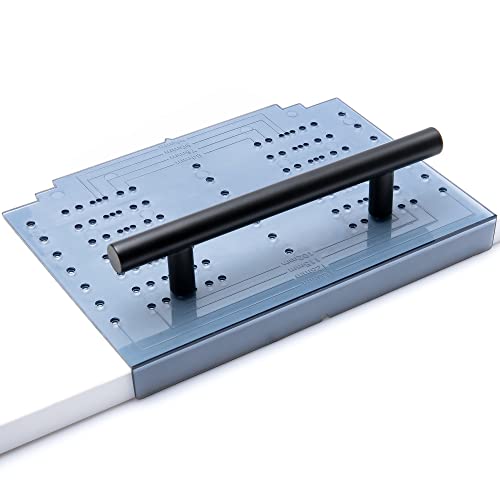
Ravinte Cabinet Door Drawer Hardware Installation Template Kit,Big,1 Pack | Drill Bit Included, Mounting Template Layout, For Cabinet Knobs Pulls, Kitchen Hardware Installation
Check price on Amazon
Therwen 5 Pack Drawer Track Roller 13/16" Right Hand Drawer Roller Guide | Steel Bracketwith Nylon Wheels, for Dressers Old Cabinet Guides Repair, replacement, Includes Screws, Smooth Glide Hardware
Check price on Amazon10. Frequently Asked Questions
How do I measure for kitchen cabinets?
Measure the length of each wall, noting windows, doors, and appliances. For height, measure from floor to ceiling. Use our cabinet dimension chart and placement guide for precise planning. Always measure twice and consider consulting a professional for complex layouts.
What is the best material for kitchen cabinets?
Plywood is widely considered the best cabinet box material for its strength and moisture resistance. For doors, solid wood or MDF with a quality finish are excellent. The "best" choice depends on your budget, climate, and aesthetic preferences. Learn more in our cabinet material hub.
How much should I budget for kitchen cabinets?
For a standard 10x10 kitchen, expect to spend $1,500–$3,500 for stock cabinets, $4,000–$8,000 for semi-custom, and $9,000–$20,000+ for custom. Cabinets typically account for 25–35% of a kitchen renovation budget.
What is the difference between stock and custom cabinets?
Stock cabinets are pre-made in standard sizes and are the most affordable. Custom cabinets are built to your exact specifications, offering unlimited design flexibility but at a higher cost and longer lead time. Semi-custom bridges the gap. See our full stock vs custom cabinets comparison.
How long does it take to get new kitchen cabinets?
Stock cabinets may be available immediately or within 1–2 weeks. Semi-custom cabinets typically take 4–8 weeks. Custom cabinets require 8–16 weeks. Factor in additional time for delivery, installation, and any countertop templating. See our cabinet purchase timeline.
Are soft-close cabinets worth it?
Yes, soft-close hinges and drawer slides are generally worth the small additional cost. They prevent slamming, reduce wear and tear, and add a premium feel to your kitchen. Learn more in our soft-close cabinets guide.
Final Tip: Before making any purchase, review our first cabinet checklist and cabinet buying mistakes to ensure you've covered every detail. For more in-depth guides, explore our shopping and reviews hub and cabinet types section.