
Paint vs Stain Cabinets: Which Finish Is Right for You?
Choosing between paint and stain is one of the most important decisions for your kitchen cabinets. This complete guide breaks down durability, cost, style, maintenance, and resale value so you can pick the finish that fits your home and lifestyle.
Compare FinishesIntroduction: The Finish That Defines Your Kitchen
When you're investing in new kitchen cabinets or refreshing existing ones, the finish you choose does more than just look pretty. It determines how your cabinets age, how much maintenance they need, and how easily you can update them later. Paint and stain are the two dominant options, and each comes with a distinct set of advantages and trade-offs.
Painted cabinets offer a smooth, opaque surface that can be any color imaginable. Stained cabinets, on the other hand, enhance the natural grain and character of wood, giving a warmer, more traditional feel. The right choice depends on your design goals, budget, and how much wear your kitchen sees daily.
This guide will walk you through every factor you need to consider. By the end, you'll have a clear understanding of which finish aligns with your vision. If you're still exploring broader cabinet styles, our Cabinet Style & Design Hub is a great starting point.
What Are Painted Cabinets?
Painted cabinets are finished with an opaque coating that completely covers the wood surface. The paint sits on top of the wood, creating a uniform color with no visible grain. This finish is typically applied in multiple coats—primer, paint, and sometimes a protective topcoat—to achieve a durable, smooth result.
Key Characteristics of Painted Cabinets
- Opaque finish: Completely hides the natural wood grain and imperfections.
- Unlimited color options: Can be color-matched to any shade, from soft pastels to bold jewel tones.
- Smooth surface: Often associated with modern, contemporary, and farmhouse kitchens.
- Repairability: Minor chips and scratches can be touched up with matching paint.
- Best for: MDF, particle board, and lower-grade woods that don't have attractive grain.
Painted finishes are especially popular in contemporary kitchen cabinet styling and farmhouse kitchen cabinet styling, where clean lines and uniform color are prized. They also work well with two-tone cabinet design, allowing you to mix a bold island color with neutral perimeter cabinets.
Key Takeaway: Painted cabinets are ideal if you want a specific color, a uniform look, or need to cover up wood that isn't visually appealing. They offer the most design flexibility.
What Are Stained Cabinets?
Stained cabinets are finished with a translucent dye or pigment that penetrates the wood surface. Unlike paint, stain doesn't sit on top of the wood—it soaks in and enhances the natural grain, color, and texture. A clear topcoat (such as polyurethane or lacquer) is then applied to protect the wood and add sheen.
Key Characteristics of Stained Cabinets
- Translucent finish: Allows the natural wood grain to show through.
- Warm, natural look: Enhances the character and depth of real wood.
- Color range: Limited to wood tones—from light honey to deep espresso—but can be custom-mixed.
- Repairability: More difficult to repair; scratches and stains can penetrate the wood.
- Best for: Solid wood and high-quality plywood cabinets with attractive grain.
Stained cabinets are a hallmark of classic kitchen cabinet styling and eclectic kitchen cabinet styling. They pair beautifully with natural materials like granite countertops and solid surface countertops, and they're a natural fit for Nordic kitchen cabinet styling with its emphasis on light woods.
Key Takeaway: Stained cabinets are the right choice if you love the look of real wood and want a warm, timeless aesthetic. They work best with high-quality solid wood or plywood.
Paint vs Stain Cabinets: Side-by-Side Comparison
The table below summarizes the most important differences between painted and stained cabinets. Use it as a quick reference, then dive into the detailed sections that follow.
| Factor | Painted Cabinets | Stained Cabinets |
|---|---|---|
| Appearance | Opaque, uniform color; hides grain | Translucent; enhances natural grain |
| Color Options | Unlimited (any color) | Limited to wood tones (custom blends possible) |
| Durability | Good; chips can be touched up | Excellent; topcoat protects wood |
| Maintenance | Easy to clean; touch-ups simple | Requires occasional re-oiling or topcoat refresh |
| Repairability | High (paint over damage) | Low (damage often reaches bare wood) |
| Cost | $800–$2,500+ (professional refinishing) | $1,200–$3,500+ (professional refinishing) |
| Best Wood Type | MDF, particle board, lower-grade wood | Solid wood, high-quality plywood |
| Style Fit | Modern, contemporary, farmhouse | Traditional, rustic, classic, transitional |
| Resale Impact | Can be polarizing; neutral colors safest | Generally appealing; wood tones are timeless |
Quick Verdict: Paint wins for color flexibility and easy repair. Stain wins for natural beauty and durability. Your lifestyle and design goals should decide the winner.
Durability & Wear: Which Finish Lasts Longer?
Both painted and stained cabinets can last for decades if properly applied and maintained. However, they age differently and handle wear in distinct ways.
Painted Cabinet Durability
High-quality painted cabinets use a multi-step process: primer, two or more color coats, and often a protective clear topcoat. This creates a hard, smooth surface that resists moisture and stains. The main vulnerability is chipping. If a painted cabinet is bumped with a heavy pot or scraped by a drawer, the paint can chip away, revealing the bare wood underneath.
Fortunately, paint chips are relatively easy to fix. You can sand the area lightly, apply matching paint, and blend it in. This makes painted cabinets a practical choice for busy kitchens where minor damage is inevitable.
Stained Cabinet Durability
Stained cabinets are protected by a clear topcoat—usually polyurethane, lacquer, or varnish. This topcoat forms a hard barrier that resists scratches, moisture, and heat. Because the stain penetrates the wood, there's no surface layer to chip away. However, if the topcoat is scratched deeply, moisture can reach the stained wood and cause discoloration or warping.
Stained cabinets generally handle daily wear very well, but they're less forgiving of deep scratches. Repairing a stained cabinet often means sanding down to bare wood and re-staining, which is difficult to blend seamlessly.
Durability Winner: Stained cabinets have a slight edge for long-term wear resistance, but painted cabinets are easier to repair when damage occurs. For high-traffic kitchens, either finish works well with proper care.
Cost Breakdown: Paint vs Stain Cabinets
Cost is often a deciding factor, and the truth is that both options can range widely depending on whether you DIY or hire a professional, and whether you're refinishing existing cabinets or buying new ones.
Painted Cabinet Costs
- DIY painting: $200–$600 for materials (primer, paint, brushes, sandpaper, tape).
- Professional painting: $800–$2,500+ for a typical kitchen, depending on size and prep work.
- New painted cabinets: $1,500–$6,000+ for a standard kitchen, depending on material and brand.
Painting is generally the more budget-friendly option, especially if you're refinishing existing cabinets. The prep work—cleaning, sanding, and priming—is the most time-consuming part, but it's what ensures a lasting finish.
Stained Cabinet Costs
- DIY staining: $300–$800 for materials (stain, topcoat, brushes, sandpaper).
- Professional staining: $1,200–$3,500+ for a typical kitchen.
- New stained cabinets: $2,000–$8,000+ for solid wood or high-quality plywood.
Staining tends to cost more because it requires higher-quality wood and more labor-intensive finishing. The wood itself must be attractive enough to stain, and the process involves multiple steps: sanding, staining, sealing, and topcoating.
Cost Winner: Painted cabinets are generally more affordable, especially for refinishing projects. Stained cabinets cost more upfront but can add significant value if you're using high-quality wood.
Style & Design Impact: What Look Are You After?
The finish you choose dramatically affects the overall feel of your kitchen. Paint and stain each unlock different design possibilities.
Painted Cabinets for Bold, Modern Statements
Painted cabinets are the go-to choice for homeowners who want a specific color palette. Whether you're drawn to a crisp white kitchen, a moody black kitchen cabinet design, or a calming blue kitchen cabinet scheme, paint gives you complete control.
Paint also works beautifully with neutral cabinet palettes and bold cabinet palettes alike. If you're experimenting with cabinet color psychology, paint is your canvas. And for two-tone cabinet design, paint allows you to pair a colorful island with neutral perimeter cabinets.
Stained Cabinets for Timeless, Natural Warmth
Stained cabinets celebrate the beauty of wood. They bring warmth and texture that painted cabinets simply can't match. If you love the look of natural oak, rich walnut, or honey maple, stain is the way to go.
Stained cabinets pair exceptionally well with granite countertops, quartz cabinet tops, and concrete countertops. They're also a natural fit for farmhouse and classic kitchen styles. If you're aiming for a cabinet color harmony that feels organic and grounded, stain is the answer.
Style Verdict: Paint for bold colors and modern clean lines. Stain for natural warmth and traditional elegance. Neither is better—it's about the look you want to live with.
Maintenance & Repair: What Happens After Installation?
How you maintain your cabinets determines how they look years down the road. Paint and stain have different maintenance needs.
Maintaining Painted Cabinets
- Cleaning: Wipe with a soft, damp cloth and mild dish soap. Avoid abrasive cleaners.
- Touch-ups: Keep leftover paint for quick fixes. Chips can be filled and painted over.
- Long-term care: Avoid excessive moisture; wipe up spills promptly. Reapply topcoat every 5–10 years if needed.
Painted cabinets are forgiving. A small chip or scratch is a minor inconvenience, not a crisis. This makes them ideal for families with children or pets.
Maintaining Stained Cabinets
- Cleaning: Use a wood-safe cleaner or a damp cloth. Avoid soaking the wood.
- Touch-ups: Difficult. Deep scratches require sanding, re-staining, and re-sealing.
- Long-term care: Re-oil or reapply topcoat every 2–5 years to prevent drying and cracking.
Stained cabinets require more careful maintenance. They're not fragile, but they demand attention. If you prefer low-maintenance surfaces, paint may be the better choice.
Maintenance Winner: Painted cabinets are easier to clean and repair. Stained cabinets need periodic re-oiling but reward you with a rich, natural look that ages gracefully.
Resale Value: Which Finish Appeals to More Buyers?
If you plan to sell your home, the finish you choose can influence buyer interest. Real estate agents often note that kitchen cabinets are a major selling point.
Painted Cabinets & Resale
Painted cabinets can be a double-edged sword. A fresh coat of white or light gray paint can make a kitchen feel bright, clean, and updated—qualities that appeal to a wide range of buyers. However, bold or unconventional colors can turn buyers off. If resale is a priority, stick to neutral tones like white, cream, or soft gray.
Stained Cabinets & Resale
Stained cabinets generally have broader appeal because wood tones are timeless. Buyers appreciate the natural warmth and the perception of quality that comes with real wood. That said, very dark stains can feel dated in some markets, while light-to-medium wood tones tend to be universally appealing.
Resale Winner: Stained cabinets in timeless wood tones have a slight edge for broad appeal. If you paint, choose neutral colors to maximize buyer interest.
How to Choose the Right Finish for Your Cabinets
Still undecided? Use these guiding questions to clarify your priorities:
- What's your design style? Modern or farmhouse? Go paint. Traditional or rustic? Go stain.
- What's your budget? Paint is typically more affordable, especially for refinishing.
- What condition is your wood in? If the grain is beautiful, stain it. If it's damaged or unattractive, paint it.
- How much maintenance do you want? Paint is easier to repair; stain needs periodic sealing.
- Are you planning to sell soon? Neutral paint or timeless stain are safest.
If you're still comparing broader cabinet construction choices, our guides on framed vs frameless cabinets and plywood vs particle board cabinets can help you make a fully informed decision. And if you're ready to explore specific products, browse our curated highest rated cabinets and editor's choice cabinets.
Final Verdict
Choose painted cabinets if: You want a specific color, a modern clean look, easier maintenance, and a more budget-friendly option. Paint is ideal for MDF and lower-grade wood cabinets.
Choose stained cabinets if: You love natural wood grain, want a timeless traditional aesthetic, and don't mind a bit more maintenance. Stain is best for solid wood and high-quality plywood cabinets.
Whichever you choose, the key is proper preparation and quality materials. A well-executed finish—whether paint or stain—will serve you beautifully for years to come.
Frequently Asked Questions: Paint vs Stain Cabinets
There's no universal "better" choice. Paint offers unlimited color options, easier repairs, and a more modern look. Stain highlights natural wood grain, provides a timeless aesthetic, and can be more durable in the long run. The right choice depends on your style preferences, budget, wood quality, and how much maintenance you're willing to do.
Both can last decades with proper care. Stained cabinets with a quality topcoat resist scratches well, but deep damage is hard to repair. Painted cabinets can chip, but touch-ups are easy. In terms of longevity, stain has a slight edge because the color penetrates the wood rather than sitting on top—but painted cabinets are more forgiving when accidents happen.
It's extremely difficult and usually not recommended. Paint must be completely stripped down to bare wood before stain can penetrate evenly. In most cases, it's more practical to repaint painted cabinets or replace them. If you want the look of wood, consider gel stains or wood-look products designed for painted surfaces, but results vary.
Generally, painted cabinets are less expensive, especially for refinishing projects. DIY painting costs $200–$600 in materials, while professional painting runs $800–$2,500+. Staining costs more because it requires higher-quality wood and more labor-intensive finishing. However, new stained cabinets can range from $2,000 to $8,000+, depending on wood species and construction quality.
Stained cabinets in timeless wood tones (like medium oak, maple, or walnut) generally appeal to a broad range of buyers. Painted cabinets in neutral colors like white or soft gray also sell well. The key is to avoid overly bold or trendy colors that may polarize buyers. Neutral paint or natural stain is the safest bet for resale.
Yes, both are DIY-friendly with the right preparation and tools. Painting is more forgiving for beginners—mistakes can be sanded and repainted. Staining requires more precision because uneven application can leave blotches or lap marks. If you're staining, practice on a spare piece of wood first. If you're painting, invest in quality primer and a paint sprayer for a smooth finish.
Recommended Cabinet Finishing Products
⚠️ AFFILIATE DISCLOSURE: This website contains affiliate links. As an affiliate Associate, we earn from qualifying purchases. If you make a purchase through these links, we may receive a small commission at no additional cost to you. Read our full affiliate policy.

Rust-Oleum Cabinet Transformations & Trim Paint, Pure White, Quart | Cabinet paint, Smooth durable finish, Easy-clean coating, Quick dry formula, For cabinets and trim
Check price on Amazon
Varathane Premium Fast Dry Dark Walnut Wood Stain | Oil-Based, 1 Coat Color, 1 Hour Dry Time, Interior Wood Stain, Furniture, Cabinets, Doors, Covers Up to 70 Sq Ft, Half Pint
Check price on Amazon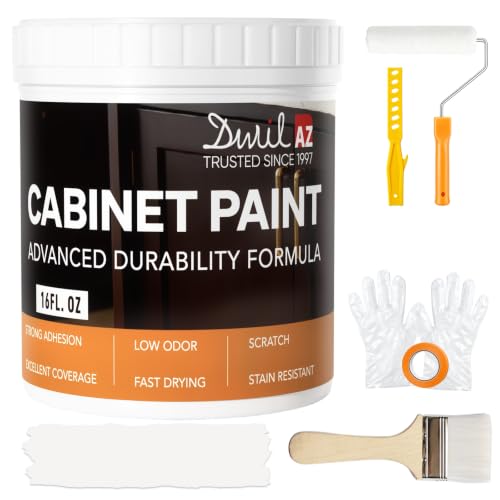
DWIL Cabinet Paint, Water Based Kitchen Cabinet Paint, Furniture Paint, White Paint for Wood, Low Odor, Fast Drying, Semi-Gloss, 16oz White
Check price on Amazon
Heirloom Traditions Multi Surface Paint, All-In-One, Iron Gate, 1 Quart | no prep paint, no sand no prime cabinet paint, interior and exterior, low luster velvet sheen, for wood, metal and glass
Check price on Amazon
SENVEN Wood Stain, Red Teak Wood Stain, 100ml Woods-Stain for Woods, Furniture, Cabinet, Fast Drying Woods-Stain, Non-Toxic Wood-Stains, Water Based & Low Odor Wood-Stains, Indoor&Outdoor Woods Stains
Check price on Amazon
ALL-IN-ONE Paint by Heirloom Traditions, Oyster, Quart
Check price on Amazon
INSL-X Cabinet Coat - Urethane Acrylic Satin Sheen Enamel Cabinet Paint, White, 1 Quart
Check price on Amazon