
Stainless Steel Pots and Pans: The Complete Buying Guide
Everything you need to know before investing in stainless steel cookware — materials, construction, compatibility, and top-rated sets for every kitchen.
SEE TOP PICKSWhy Stainless Steel? Stainless steel pots and pans are the workhorses of professional and home kitchens alike. They resist rust, do not react with acidic foods, and can handle high-heat searing better than most non-stick alternatives. This guide walks you through everything you need to choose the right set for your cooking style and budget.
Why Choose Stainless Steel Cookware?
Stainless steel pots and pans have earned their place in kitchens worldwide for good reason. Unlike aluminum or copper cookware, stainless steel is non-reactive — meaning it won't leach metallic flavors into your tomato sauce, lemon butter, or wine reductions. It is also incredibly durable, often lasting decades with proper care, and is safe for use with metal utensils when you choose the right finish.
The material's ability to develop a fond — those caramelized bits that stick to the pan after searing — is actually a major advantage for building deep, savory pan sauces. While some home cooks initially find stainless steel intimidating, the learning curve is short and the rewards are significant. Once you understand heat control, stainless steel becomes the most versatile cookware material you can own.
If you are building out your kitchen from scratch, consider how your cookware will integrate with your storage. A well-organized pull-out drawer or a dedicated cabinet accessory system can keep heavy pots and pans within easy reach. For those planning a full kitchen refresh, our cabinet starter hub offers a broader overview of storage and layout options.
Recommended Stainless Steel Pots and Pans
⚠️ AFFILIATE DISCLOSURE: This website contains affiliate links. As an affiliate Associate, we earn from qualifying purchases. If you make a purchase through these links, we may receive a small commission at no additional cost to you. Read our full affiliate policy.

Cuisinart Chef's Classic Stainless Steel Pots and Pans Set, 11 pc, 77-11G | Induction cookware compatible with all stovetops, tri-ply base, cool-grip handles, nontoxic cookware set, oven safe 550°F
Check price on Amazon
Cuisinart 17-Piece Chef's Classic Stainless Steel Pots and Pans Set, 77-17N | Uncoated mirror finish with aluminum encapsulated base for even heat, 17-piece stainless steel cookware set
Check price on Amazon
CAROTE 15pcs Tri-Ply Stainless Steel Cookware Set with Detachable Handle | Pots and Pans Set, Non-Toxic, Induction Compatible, Dishwasher& Oven Safe, Easy Storage, for Kitchen/Camping/RV Cooking
Check price on Amazon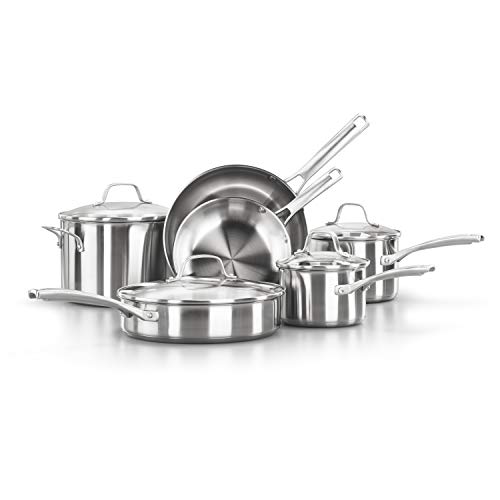
Calphalon Classic Stainless Steel Cookware Set, 10-Piece, Impact-Bonded Aluminum Base, Stay-Cool Handles, Oven Safe 450F, Silver
Check price on Amazon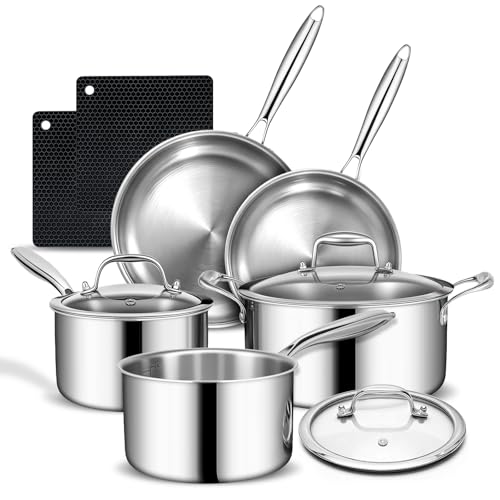
3 Ply Stainless Steel Cookware Set, AIVIKI 10-Pieces Pots and Pans Set, Induction Kitchen Cookware Set, Oven Safe to 500℉, Chef Quality Cooking Set w/Fry Pans, Saucepans, Dutch Oven, Kitchen Essential
Check price on Amazon
EWFEN 3 Ply Stainless Steel 11-Piece Cookware Set with Lids, Pots and Pans Kitchen Set, Non-Toxic, Induction, Oven, Dishwasher Safe, Professional Chef Quality
Check price on Amazon
Cuisinart MultiClad Pro 12-Piece Stainless Steel Cookware Set, MCPS-12N | Tri-ply clad construction with heat surround technology, brushed stainless steel, 12-piece set
Check price on Amazon
CAROTE 21 PCS Tri-Ply Stainless Steel Cookware Set Pots and Pans Set, Gold | Non Toxic Induction Kitchen Cooking Sets,Oven & Dishwasher Safe, All-Stovetop Compatible
Check price on AmazonUnderstanding Stainless Steel Construction
Not all stainless steel cookware is created equal. The performance differences come down to how the metal is constructed. There are three main types you will encounter:
| Construction Type | How It Works | Best For | Typical Price Range |
|---|---|---|---|
| Fully Clad (Tri-Ply / Multi-Ply) | Aluminum or copper core sandwiched between layers of stainless steel across the entire pan, including the walls. | Even heat distribution, searing, deglazing, and professional-style cooking. | $150–$600 per set |
| Disk Bottom (Encapsulated Base) | Aluminum disk bonded only to the bottom of the pan, with stainless steel walls above. | Budget-friendly everyday cooking where sidewall heat is less critical. | $60–$200 per set |
| Aluminum Core with Stainless Exterior | Aluminum body with a stainless steel exterior cladding for appearance and induction compatibility. | Lightweight cooking and easy handling. | $80–$250 per set |
Fully clad cookware is generally the gold standard for serious home cooks. The multi-layer construction ensures heat spreads evenly up the sides of the pan, not just across the base, which prevents hot spots and makes reduction sauces more predictable. However, disk-bottom pans can be an excellent value choice if you primarily boil, simmer, and sauté at moderate temperatures.
The 18/10 Grade Explained
You will often see "18/10" stamped on stainless steel cookware. This refers to the ratio of chromium to nickel in the alloy: 18% chromium and 10% nickel. The chromium provides corrosion resistance, while the nickel adds durability and a lustrous finish. Most quality cookware uses 18/10 stainless steel for the cooking surface. Lower grades like 18/0 (no nickel) are sometimes used for exterior layers or magnetic bases to make the pan induction-compatible.
Key Features to Evaluate Before Buying
- Base Thickness: Look for a base at least 3mm thick. Thinner bases warp easily and create hot spots. A quality tri-ply pan typically has a 3–5mm total thickness.
- Handle Material & Attachment: Riveted handles are stronger than welded ones. Look for stay-cool handles made of stainless steel or a heat-resistant composite. Cast stainless handles are durable but can get hot on the stovetop.
- Induction Compatibility: If you have an induction cooktop, verify the pan has a magnetic stainless steel base (often labeled "induction ready").
- Oven Safety: Most stainless steel pans are oven-safe to 500°F (260°C), but always check the handle's temperature rating. Silicone or composite handles may have lower limits.
- Weight & Balance: Heavier pans feel more stable on the stove and resist tipping, but lighter pans are easier to maneuver. Find the balance that suits your strength and cooking style.
- Lid Type: Tempered glass lids let you monitor cooking without lifting, but they are not oven-safe to the same temperatures as stainless steel lids. Choose based on your cooking habits.
- Rim Design: A rolled or flared rim makes pouring easier and reduces drips. Sealed rims prevent water from entering the pan's layers, which can cause internal corrosion over time.
Pros and Cons of Stainless Steel Cookware
Advantages
- Non-reactive with acidic foods
- Extremely durable and long-lasting
- Oven and broiler safe
- Develops excellent fond for sauces
- Does not scratch easily (no coating to chip)
- Dishwasher safe (most models)
- Induction-compatible options available
Disadvantages
- Food can stick without proper technique
- Requires preheating and fat for best results
- Heavier than aluminum or non-stick pans
- Can be more expensive upfront
- Handles may get hot on the stovetop
- Requires immediate cleaning to avoid staining
How to Care for Stainless Steel Pots and Pans
Proper care keeps stainless steel cookware looking and performing its best for decades. The most important rule is to avoid sudden temperature changes — never plunge a hot pan into cold water, as this can cause warping. Let pans cool naturally before washing.
For everyday cleaning, warm water, mild dish soap, and a soft sponge are sufficient. If food has stuck, simmer water in the pan for a few minutes to loosen it, then scrape gently with a wooden or silicone spatula. For stubborn stains or heat discoloration (a rainbow tint on the surface), a paste of baking soda and water or a specialized stainless steel cleaner will restore the shine.
If your kitchen features wood kitchen cabinets or natural stone countertops, be mindful that stainless steel cookware can scratch these surfaces if dragged. Use a protective mat or trivet underneath. For cabinets that need occasional refreshing, our guide on wood polishing covers safe techniques for maintaining a beautiful finish.
What to Cook in Stainless Steel (and What to Avoid)
Stainless steel excels at high-heat cooking methods: searing steaks, browning chicken, sautéing vegetables, and deglazing with wine or stock to create pan sauces. It is also ideal for boiling pasta, simmering soups, and reducing sauces. The material's ability to handle high temperatures without degrading makes it the preferred choice for any recipe that requires a hard sear or a rich fond.
However, stainless steel is not the best choice for delicate foods that tend to stick, such as scrambled eggs, fish fillets, or crepes. For these, a non-stick or well-seasoned cast iron pan will serve you better. Many home cooks keep a mix of both — stainless steel for searing and sauces, non-stick for eggs and delicate proteins.
If you are organizing a compact kitchen, consider how you will store different pan types. A drawer cabinet with dividers can keep pans from scratching each other, while a wall cabinet can hold lids and smaller saucepans. For those with limited cabinet space, a wire storage rack offers a simple solution for hanging pots and pans within reach.
The Stainless Steel Saucepan: A Kitchen Essential
If you are building your cookware collection piece by piece, the stainless steel saucepan is one of the most versatile pieces you can own. A good saucepan handles everything from boiling eggs and making rice to whipping up custards and reheating soups. Look for a saucepan with a comfortable, stay-cool handle and a tight-fitting lid that traps heat and moisture.
A 1.5 to 2-quart saucepan is ideal for singles or couples, while a 3-quart size works well for families. If you frequently cook grains or oatmeal, consider a saucepan with a rolled rim for easy pouring. Matching your saucepan to the rest of your cookware set ensures consistent performance and a cohesive look in your kitchen.
Stainless Steel vs. Other Cookware Materials
| Material | Heat Conductivity | Durability | Best Use Case |
|---|---|---|---|
| Stainless Steel | Moderate (improved with clad cores) | Excellent | Searing, deglazing, sauces, everyday cooking |
| Cast Iron | Low (retains heat well) | Excellent | High-heat searing, baking, rustic dishes |
| Non-Stick (PTFE/Ceramic) | Good | Limited lifespan | Eggs, fish, low-fat cooking, delicate foods |
| Copper | Excellent | Good (requires care) | Precise temperature control, sauces, pastry |
| Aluminum | Excellent | Moderate (dents easily) | Budget cooking, lightweight handling |
Many professional kitchens rely on a combination of stainless steel and cast iron. Stainless steel handles the majority of tasks with ease, while cast iron is reserved for specific high-heat or oven-baking applications. Non-stick pans complement both for egg dishes and low-fat cooking. Understanding these differences helps you build a cookware collection that covers all your needs without unnecessary overlap.
How to Choose the Right Set for Your Kitchen
- Start with the essentials: A 10-inch skillet, a 2-quart saucepan, a 4-quart sauté pan, and a 6–8 quart stockpot cover most cooking tasks.
- Consider your stovetop: Induction cooks need magnetic bases. Gas cooks have more flexibility. Electric coil stoves benefit from flat, heavy bottoms for even contact.
- Think about storage: Measure your cabinet space before buying. Nesting sets save space, while open-stock pieces let you customize your collection.
- Check the warranty: Quality brands offer lifetime warranties. This is a good indicator of the manufacturer's confidence in their product.
- Read reviews on handle comfort: Handle design varies significantly between brands. What works for one cook may not work for another, especially if you have smaller or larger hands.
- Buy open stock if you only need one piece: If you already have a stockpot or skillet you love, you can often purchase individual stainless steel pieces to fill gaps without buying a full set.
Frequently Asked Questions
Final Thoughts
Stainless steel pots and pans are a long-term investment in your kitchen. They are versatile, durable, and capable of producing restaurant-quality results when used correctly. Whether you are replacing a worn-out set or building your first serious cookware collection, understanding the construction, features, and care requirements will help you make a confident purchase.
If you are also upgrading your kitchen storage to accommodate new cookware, explore our guides on storage cabinets and organizing pantry spaces. For those planning a complete kitchen renovation, our kitchen remodel contractors resource can help you find professionals in your area. And if you are considering a new sink to pair with your cookware, our stainless steel utility sink guide covers options that complement a stainless steel kitchen aesthetic.
Ready to start cooking? Browse our recommended stainless steel pots and pans above, and take the first step toward a more versatile, professional-grade kitchen.