


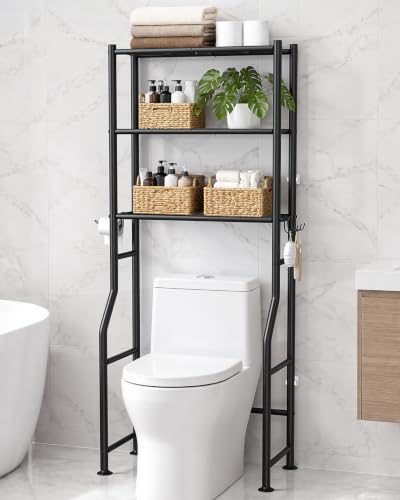


What Is a Free Standing Over The Toilet Storage Cabinet?
A free standing over the toilet storage cabinet is a freestanding furniture piece designed to fit directly over your toilet tank, utilizing the often-wasted vertical space above it. Unlike built-in or wall-mounted units, these cabinets rest on the floor with legs or a base, requiring no drilling, no wall anchors, and no permanent modifications to your bathroom.
This makes them an excellent choice for renters, DIY-averse homeowners, or anyone looking for a flexible storage solution. Most models feature 2-5 open shelves, some include enclosed cabinet doors, and many offer a combination of both. They are particularly valuable in small bathrooms where floor space is limited but vertical space remains untapped. For more small-space solutions, explore our guide on over the toilet storage for small spaces.
Key Benefits of Freestanding Over-The-Toilet Cabinets
1. No Installation Required: The most obvious advantage is that you can set it up in minutes without tools. This is perfect for renters who cannot make permanent changes. If you are looking for other renter-friendly options, consider narrow free standing bathroom cabinets.
2. Maximizes Vertical Space: By using the area above the toilet, you free up valuable floor space and countertop area. This is a game-changer for small bathrooms.
3. Flexible and Portable: You can move it to a different bathroom, reposition it for cleaning, or take it with you when you move.
4. Affordable: Freestanding models are generally more affordable than custom built-ins or wall-mounted cabinets. You can find quality options starting around $60, with premium models in the $150–$400 range.
5. Variety of Styles: From modern minimalist to rustic farmhouse, there is a freestanding cabinet to match your bathroom decor. For more style inspiration, see our guide on bathroom wall colors with white cabinets.
Sizes and Dimensions: What to Look For
Before purchasing, measure your toilet area carefully. The standard freestanding over-the-toilet cabinet measures approximately 24-26 inches wide, 60-68 inches tall, and 10-12 inches deep. However, sizes vary.
Width: Ensure the cabinet's legs or base fit around your toilet tank. Most toilets are 18-20 inches wide, so a cabinet 24-26 inches wide is usually safe.
Height: Consider your ceiling height and the height of your toilet tank. You want enough clearance to access the tank lid if needed.
Depth: A depth of 10-12 inches is standard. Deeper cabinets offer more storage but may feel bulky in a small bathroom.
For more precise measurements, check our cabinet dimension chart.
Materials and Durability
The material of your cabinet affects its durability, appearance, and price.
Engineered Wood (MDF/Particle Board): Most affordable options are made from engineered wood. They are lightweight and come in many finishes but may not hold up well in humid bathrooms over time. Look for models with a moisture-resistant finish.
Solid Wood: More expensive but far more durable and aesthetically pleasing. Bamboo, teak, and acacia are popular choices for bathroom furniture because they resist moisture naturally. A solid wood cabinet can last for decades.
Metal: Metal cabinets, often with a powder-coated finish, are rust-resistant and very durable. They offer a modern, industrial look. You can find stainless steel storage cabinets with doors that work well in bathrooms.
Plastic/Resin: The most budget-friendly and waterproof option. They are easy to clean but may look less premium.
Design Features to Consider
Open Shelves vs. Enclosed Cabinets: Open shelves are great for frequently used items and display, while enclosed cabinets hide clutter. Many models combine both.
Adjustable Shelves: Look for cabinets with adjustable shelves to accommodate items of various heights, from tall shampoo bottles to folded towels.
Anti-Tip Hardware: Safety first! Even freestanding cabinets should be secured to the wall with an anti-tip strap, especially in homes with children or pets. Check our guide on cabinet anti-tip straps for more information.
Finish: Choose a finish that complements your bathroom. White and gray are popular neutral choices. If you have a dark vanity, consider a lighter cabinet. For color inspiration, see our article on bathroom wall colors with white cabinets.
How to Choose the Right Cabinet for Your Bathroom
1. Assess Your Storage Needs: What do you need to store? Towels, toiletries, toilet paper, cleaning supplies, or decorative items? Make a list and choose a cabinet with the right combination of shelves and cabinets.
2. Measure Your Space: As mentioned, measure width, height, and depth. Also, consider the swing of your bathroom door and the location of your toilet paper holder. A wall mounted ceramic toilet paper holder can be a great addition that doesn't interfere with a freestanding cabinet.
3. Consider Your Style: Your cabinet should complement your existing bathroom vanity and mirror. If you have a modern 30 inch bathroom vanity with sink and backsplash, a sleek, minimalist cabinet will look best. For a more traditional look, consider a tall recessed medicine cabinet with mirror for a cohesive design.
4. Check for Stability: Read reviews about stability. A wobbly cabinet is a safety hazard and a nuisance.
5. Budget: Set a budget before you shop. You can find decent options for under $100, but expect to pay $150–$300 for higher-quality materials and better design.
Installation and Assembly Tips
Assembly is usually straightforward and can be done with basic tools. Here are some tips:
- Read the Instructions: Always follow the manufacturer's instructions.
- Organize Parts: Lay out all parts and hardware before starting.
- Use the Right Tools: A screwdriver, allen wrench, and sometimes a hammer are all you need.
- Two People Are Better: For larger cabinets, having a helper makes assembly easier and safer.
- Secure to the Wall: Even though it's freestanding, use the included anti-tip kit to secure the cabinet to the wall. This prevents tipping and keeps everyone safe. For more on safe installation, see our cabinet installation guide.
- Level It: If the cabinet has adjustable feet, use them to level it on uneven floors.
Maintenance and Care
To keep your freestanding cabinet looking great:
- Dust Regularly: Use a soft cloth or duster.
- Clean Spills Immediately: Wipe up water and spills to prevent damage, especially on engineered wood. For more tips, read our liquid spill cleanup guide.
- Avoid Harsh Chemicals: Use mild soap and water or a wood-safe cleaner.
- Check Hardware: Periodically tighten screws and bolts.
- Control Humidity: Use an exhaust fan or dehumidifier to reduce moisture. Our cabinet humidity control guide has more advice.
Complementary Bathroom Storage Solutions
A freestanding over-the-toilet cabinet is just one piece of the puzzle. To create a fully organized bathroom, consider these complementary solutions:
- Towel storage solutions for small bathrooms: Wall hooks, over-door racks, and shelves.
- Bathroom storage cabinets: Additional freestanding or wall-mounted cabinets.
- Medicine cabinet with mirror and towel bar: A dual-purpose space saver.
- Recessed bathroom mirror cabinet with lights: For a sleek, built-in look.
- Wall mounted bathroom cabinet above toilet: If you prefer a wall-mounted option.
If you are planning a larger bathroom renovation, you may also be interested in our guides on painting a bathroom vanity without sanding and waterproof paint for bathroom cabinets.
Frequently Asked Questions (FAQ)
Are freestanding over-the-toilet cabinets stable?
Yes, most modern models are designed with a wide base and include anti-tip hardware to secure them to the wall. Proper assembly and installation are key to stability.
Will a freestanding cabinet fit over my toilet?
Most standard toilets are 18-20 inches wide and 28-30 inches tall. Most freestanding cabinets are designed to fit these dimensions. Always measure your toilet and the space around it before purchasing.
Can I use a freestanding cabinet in a small bathroom?
Absolutely! They are specifically designed for small bathrooms. They utilize vertical space, leaving your floor clear. For more ideas, see our guide on over the toilet storage for small spaces.
What is the best material for a bathroom cabinet?
Solid wood (like teak or bamboo) and metal (stainless steel) are the most durable and moisture-resistant. Engineered wood with a good finish is a budget-friendly option but requires more care.
How do I clean a freestanding over-the-toilet cabinet?
Dust regularly with a soft cloth. For deeper cleaning, use a damp cloth with mild soap. Avoid soaking the wood. Dry immediately.
Do I need to assemble it myself?
Most freestanding cabinets require some assembly. They come with instructions and necessary hardware. It usually takes 30-60 minutes.