
Painting Laminate Cabinets: Before and After Transformations
Discover how a fresh coat of paint can turn tired laminate cabinets into a stunning kitchen centerpiece. Real before-and-after results, step-by-step prep, and cost breakdowns — everything you need before you pick up a brush.
SEE THE TRANSFORMATIONSWhy This Guide Matters: Laminate cabinets are affordable and durable, but their glossy factory finish and synthetic surface make them one of the trickiest materials to paint. Many homeowners assume they are stuck with the original color forever — they are not. With the right bonding primer and a careful prep process, laminate can take paint beautifully, and the before-and-after difference is often dramatic. This guide walks you through what actually works, what it costs, and what to expect.
Painting Laminate Cabinets Before and After: What Changes
Before you commit, it helps to understand what a painted laminate cabinet actually looks like in practice. The "before" is usually a dated honey-oak or almond laminate with visible seams, a slightly waxy sheen, and maybe some peeling along the edges. The "after" is a smooth, uniform finish in a modern color — white, sage green, navy, or charcoal are the most popular choices right now.
The transformation is not just cosmetic. A freshly painted cabinet brightens the entire room, makes small kitchens feel larger, and can add perceived value to your home. If your goal is a full kitchen refresh without the cost of new cabinetry, this is one of the highest-impact projects you can do. If you are also rethinking the wider room, our guide on kitchen remodel planning pairs well with this project.
Before: Dated Laminate
- Yellowed or orange-toned oak laminate
- Visible scratches and edge peeling
- Glossy, slightly sticky surface
- Outdated hardware and hinges
After: Painted Finish
- Clean, uniform color with satin or semi-gloss sheen
- Smooth, wipeable surface
- Updated hardware and pulls
- Brighter, more modern kitchen feel
One thing the before-and-after photos rarely show is the prep work. That is where the real result is decided. Skipping degreasing or using the wrong primer is the number one reason painted laminate fails within a year. If you want to see how a similar project plays out on a full white kitchen, read I want to paint my kitchen cabinets white for color-specific guidance.
Can You Really Paint Laminate Cabinets?
Yes — but with conditions. Laminate is a non-porous, synthetic surface, which means paint does not naturally grip it the way it grips wood. The solution is a bonding primer specifically formulated for glossy or hard-to-stick surfaces. Products labeled "bonding primer" or "adhesion primer" create a chemical bridge between the laminate and your topcoat.
You will also need to degloss the surface. Light sanding with 220-grit sandpaper or a liquid deglosser removes the factory sheen and gives the primer something to bite into. Skip this step and even the best primer will struggle. For a broader look at surface preparation across different cabinet materials, see our cabinet surface cleaning guide, which covers safe cleaning agents for laminate before painting.
What you cannot do is paint over peeling, chipped, or water-damaged laminate. Those areas need to be repaired or removed first. If the laminate is lifting at the edges, glue it back down before priming, or the paint will crack along the same line.
Step-by-Step: How to Paint Laminate Cabinets
Remove Doors and Hardware
Take off all doors, drawers, hinges, pulls, and knobs. Label everything so reassembly is easy. This is also the perfect time to consider replacing kitchen cupboard door handles for an extra style upgrade.
Clean and Degrease
Kitchen cabinets collect grease, especially near the stove. Use a degreaser or a mix of warm water and dish soap. Rinse and let dry completely. Any grease left behind will cause the primer to fail.
Sand or Degloss
Lightly sand with 220-grit sandpaper, or apply a liquid deglosser. The goal is not to remove the laminate — just to dull the shine. Wipe away all dust with a tack cloth.
Apply Bonding Primer
Use a bonding primer designed for glossy surfaces. Apply thin, even coats with a foam roller for flat areas and a brush for edges. Let it cure fully before sanding lightly and wiping clean.
Paint the Topcoats
Use a high-quality cabinet paint — alkyd, urethane-enamel, or a cabinet-specific acrylic. Two thin coats are better than one thick coat. Sand lightly between coats for a smooth finish. Cabinet paint is also a great time to consider cabinet LED lighting to show off the new color.
Reassemble and Cure
Wait at least 48–72 hours before reattaching doors and hardware. Full cure takes up to a week. Avoid heavy cleaning during this window.
What Does It Cost to Paint Laminate Cabinets?
Cost depends heavily on whether you do it yourself or hire a professional, and on the size of your kitchen. Here are realistic current market ranges:
DIY Materials
$150–$600
Primer, paint, sandpaper, rollers, brushes, tape, and degreaser. Ideal for a standard 20–30 door kitchen.
Professional Painting
$1,200–$4,000
Includes labor, prep, priming, spraying or rolling, and reassembly. Larger kitchens with islands push toward the higher end.
Full Cabinet Replacement
$5,000+
For comparison — new stock cabinets often start around $5,000 and climb quickly. Painting is the budget-friendly alternative.
If you are weighing painting against a larger renovation, our average cost to repaint kitchen cabinets breakdown gives a broader view of what professionals charge across different regions and cabinet types.
Common Mistakes to Avoid
- Skipping the deglosser or sanding. Paint will peel off in sheets within months.
- Using regular primer. Standard wood primer does not bond to laminate. Always use a bonding primer.
- Painting over grease. Even a small amount of kitchen grease prevents adhesion.
- Applying thick coats. Thick paint drips, pools, and never fully cures. Thin coats are always better.
- Reassembling too soon. Doors and drawers that go back on before the paint cures will stick and smudge.
If your cabinets have deeper issues like damaged hinges or drawer glides, painting alone will not fix them. Our cabinet drawer slides replacement guide covers how to swap out failing hardware before you paint.
Caring for Painted Laminate Cabinets
Once the paint has fully cured, maintenance is simple. Wipe with a soft damp cloth and mild soap. Avoid abrasive cleaners, scouring pads, and solvents — they will dull or scratch the finish. For deeper care tips that apply to painted and laminate surfaces alike, see our guide on cabinet wood polishing, which explains safe products for maintaining sheen without damaging the topcoat.
Touch-ups are easy. Keep a small jar of your paint color on hand for chips and scuffs. Because the finish is painted rather than factory-sealed, small repairs blend more easily than they would on original laminate.
Recommended Products for Painting Laminate Cabinets
⚠️ AFFILIATE DISCLOSURE: This website contains affiliate links. As an affiliate Associate, we earn from qualifying purchases. If you make a purchase through these links, we may receive a small commission at no additional cost to you. Read our full affiliate policy.

Rust-Oleum Cabinet Transformations & Trim Paint, Pure White, Quart | Cabinet paint, Smooth durable finish, Easy-clean coating, Quick dry formula, For cabinets and trim
Check price on Amazon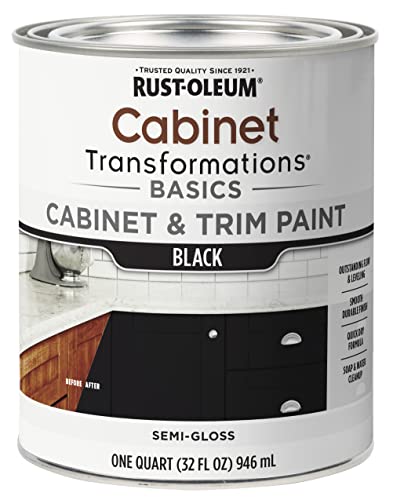
Rust-Oleum Cabinet Tranformations & Trim Paint, Black, Quart | Cabinet paint, Smooth durable finish, Easy-clean coating, Quick dry formula, For cabinets and trim
Check price on Amazon
Giani Nuvo All-In-One Cabinet Paint Kit (Tidal Haze)
Check price on Amazon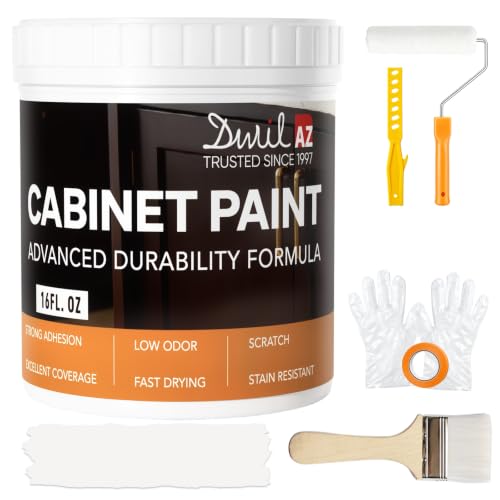
DWIL Cabinet Paint, Water Based Kitchen Cabinet Paint, Furniture Paint, White Paint for Wood, Low Odor, Fast Drying, Semi-Gloss, 16oz White
Check price on Amazon
Rust-Oleum Cabinet Transformations & Trim Paint, Cadet Gray, Quart | Cabinet paint, Smooth durable finish, Easy-clean coating, Quick dry formula, For cabinets and trim
Check price on Amazon
Giani Nuvo All-In-One Cabinet Paint Kit (Driftwood)
Check price on Amazon
INSL-X Cabinet Coat - Urethane Acrylic Satin Sheen Enamel Cabinet Paint, White, 1 Quart
Check price on AmazonFrequently Asked Questions
Can you paint laminate cabinets without sanding?
You can use a liquid deglosser instead of sanding, but you must do one or the other. Skipping both is the most common reason paint fails on laminate.
How long do painted laminate cabinets last?
With proper prep and a quality bonding primer, expect 7–10 years or more. Longevity depends on kitchen humidity, cleaning habits, and paint quality.
What is the best paint for laminate cabinets?
Cabinet-specific urethane-enamel or alkyd paints offer the best durability. Acrylic cabinet paints are easier to work with and lower in odor but may need a topcoat for heavy-use kitchens.
Do I need to remove the cabinet doors to paint?
Yes. Painting doors while attached leads to uneven coverage, drips, and paint sealing the doors shut. Remove them and lay them flat to paint.
Can I paint laminate cabinets a dark color?
Yes, but dark colors show imperfections more. Prep work needs to be especially thorough, and you may need an extra coat for full coverage.
Final Thoughts
Painting laminate cabinets is one of the most cost-effective ways to transform a kitchen. The before-and-after difference is real, and with the right primer and prep, the finish can last for years. The project rewards patience more than skill — clean thoroughly, degloss completely, prime properly, and paint in thin coats. Do that, and your laminate cabinets will look like a completely different kitchen.
If you are still exploring options for your space, browse our storage cabinets hub for more cabinet ideas and inspiration.