
Kitchen Counter Depth: The Complete Guide to Standard & Custom Sizes
Discover the standard 24-inch depth, explore deeper countertop options, and learn how to choose the perfect dimensions for your kitchen layout, cabinets, and appliances.
Explore Depth GuideThe 24-Inch Rule: The standard kitchen counter depth is 24 inches. This measurement is the foundation of kitchen design, ensuring your cabinets, appliances, and walkways all work in harmony. But is it always the right choice? Let's dive deep into the details.
Why Counter Depth Is Your Kitchen's Foundation
When planning a kitchen remodel or designing a new space, one of the most critical measurements you'll encounter is the kitchen counter depth. It's more than just a number; it's a fundamental dimension that dictates how you use your kitchen, how your appliances fit, and how much space you have to move around. A standard depth of 24 inches has been the industry norm for decades, providing a reliable benchmark for cabinet makers, appliance manufacturers, and home builders. This consistency allows for a seamless integration of base cabinets, countertops, and slide-in ranges. However, modern kitchen design sometimes calls for deviations from the norm. Whether you're considering a deeper countertop for a luxurious feel or a shallower one for a compact apartment, understanding the implications is key to a functional and beautiful kitchen.
This guide will walk you through everything you need to know about kitchen counter depth. We'll cover the standard measurements, the specific dimensions of different countertop materials, how depth interacts with your appliances, and when it might be wise to choose a non-standard size. By the end, you'll have the confidence to specify the perfect depth for your kitchen, ensuring a space that is both practical and aesthetically pleasing.
Top-Rated Countertops & Depth Essentials
⚠️ AFFILIATE DISCLOSURE: This website contains affiliate links. As an affiliate Associate, we earn from qualifying purchases. If you make a purchase through these links, we may receive a small commission at no additional cost to you. Read our full affiliate policy.
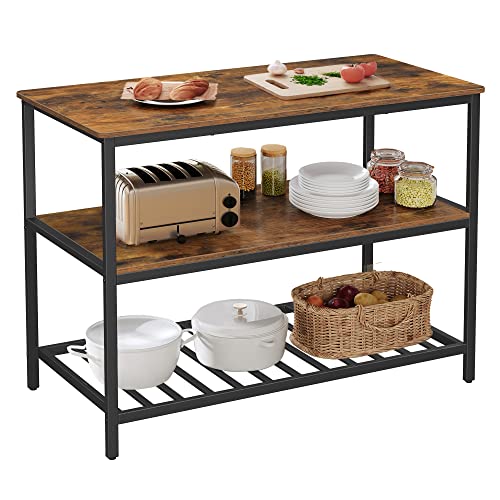
VASAGLE Kitchen Island with 3 Shelves, Storage Cabinet, Steel Structure | Kitchen Shelf with Large Wooden Worktop, 47.2 Inches Width, Rustic Brown and Matte Black, BARNET Collection UKKI01BX
Check price on Amazon
VASAGLE Kitchen Island with 3 Shelves, Storage Cabinet, Steel Structure | Kitchen Shelf with Large Wooden Worktop, 39.4 Inches Width, Golden Oak and Matte White, BARNET Collection UKKI005W09
Check price on Amazon
HOMCOM 67" Pantry Cabinet Kitchen Hutch Glass Doors Drawers White | Freestanding Storage Cabinet, Adjustable Shelves, Home Dining Room Living Room
Check price on Amazon
Sharp SJB1255GS 11.5 cu.ft. Counter Depth 24 in. 2 Door Refrigerator | Counter-Depth, Garage Ready
Check price on Amazon
2 Pack 11” Depth Expandable Kitchen Cabinet Organizer Shelves, Heavy Duty Kitchen Countertop Organizers and Storage Rack, Stackable Metal Small Storage Shelf For Pantry Counter Cupboard Organization
Check price on Amazon
2 Pack 11” Depth Expandable Kitchen Cabinet Organizer Shelves, Metal Kitchen Countertop Organizers and Storage Shelving, Heavy Duty Stackable Storage Rack Shelf For Pantry Cupboard Counter Tabletop
Check price on Amazon
Angel Line Cambridge Counter Height Table, White with Gray Top, 36.25" H x 42.25" W x 22" D
Check price on AmazonThe Standard: Understanding the 24-Inch Kitchen Counter Depth
The 24-inch standard is the bedrock of kitchen design. This measurement isn't arbitrary; it's the result of decades of ergonomic research and manufacturing standardization. When we talk about a 24-inch counter depth, we're referring to the horizontal distance from the front edge of the countertop to the wall. This depth is meticulously designed to accommodate the standard dimensions of base cabinets, which typically have a depth of 23.5 inches for the cabinet box itself, allowing for a 0.5-inch overhang of the countertop at the front.
This standard is crucial for several reasons. First, it provides ample workspace for food preparation without making you reach uncomfortably far. It's deep enough to hold a standard-sized cutting board, a microwave, or a coffee maker while still leaving room to work. Second, it ensures a standard fit for major appliances. Dishwashers, most slide-in and freestanding ranges, and built-in ovens are all designed with this 24-inch depth in mind. Deviating from this standard can lead to significant installation challenges, such as appliances that protrude awkwardly or leave unsightly gaps. When you look at options for built-in cabinets, they are almost universally manufactured to work with this standard 24-inch counter depth. This consistency is what makes kitchen design and renovation manageable for homeowners and professionals alike.
The Impact on Walkways and Workflow
The 24-inch depth also plays a critical role in the overall functionality and traffic flow of your kitchen. Building codes and design guidelines, such as the National Kitchen & Bath Association (NKBA) recommendations, specify minimum clearances between countertops to ensure a safe and efficient workspace. The standard recommendation for a single-cook kitchen is a minimum of 42 inches of clear floor space between counters, while a multi-cook kitchen should have at least 48 inches. This clearance is measured from countertop edge to countertop edge. Therefore, the depth of your counters directly impacts the width of your aisles. If you choose a deeper countertop, you must have a larger kitchen footprint to maintain these safe and comfortable clearances.
Beyond the Standard: Variations in Counter Depth
While 24 inches is the standard, it's not the only option. Depending on your kitchen's size, layout, and your specific needs, you might consider a deeper or shallower countertop. Each variation has its own set of advantages and considerations. For example, in a spacious luxury kitchen, a 25- or even 30-inch deep countertop can provide a more expansive, high-end feel, offering extra space for prep work or decorative displays. This is often seen in high-end kitchen designs where a large island serves as a focal point. However, it's important to remember that increasing depth reduces the available floor space, which can make a large kitchen feel cozier or, in a smaller space, create a cramped and inefficient workflow.
On the other hand, a shallower counter depth, such as 22 inches, might be used in a very small kitchen or a butler's pantry to save space. While this can be a clever solution for tight areas, it comes with its own challenges. Standard appliances might not fit flush, and you'll have less room for food preparation. It's a trade-off between gaining floor space and sacrificing counter real estate and appliance compatibility. When planning a major change like this, it's wise to consult guides on replacing kitchen cabinets to understand the full scope of the project. Most designers will advise sticking to the 24-inch standard unless there is a compelling reason to deviate. The key is to balance your desire for a specific look with the practical realities of appliance fit, workflow, and overall kitchen size.
Countertop Materials and Their Depth Options
The depth of your countertop is also influenced by the material you choose. Different materials are fabricated and installed in different ways, which can affect the final depth. Let's look at some popular options:
- Laminate: This is a versatile and budget-friendly option. Laminate countertops are typically pre-fabricated in standard depths of 24 inches, often with a rounded or square edge profile. They are a great choice for DIYers and quick renovations. You can find a variety of styles, some of which mimic the look of more expensive materials.
- Butcher Block: Wood butcher block countertops are often sold in standard depths of 25 inches, which allows them to be cut down to a custom fit on-site. This extra inch is a thoughtful allowance for scribing the countertop to an uneven wall. The cost of butcher block can vary widely based on the wood species, with prices often ranging from $800 to $2,500 for a standard kitchen's worth of countertop. It's a warm, durable, and classic choice.
- Solid Surface (e.g., Corian): Solid surface materials are custom-fabricated, meaning they can be created in virtually any depth. This allows for seamless integration with sinks and creative edge designs. However, this customization comes at a higher cost. A professional templating and installation process is required.
- Quartz & Granite: Like solid surface, natural stone and quartz countertops are custom-fabricated from slabs. This gives you complete control over the depth, allowing for standard 24-inch counters or dramatic, oversized islands. A major advantage is the ability to create a seamless look. For a truly unique and high-end kitchen, exploring options like custom kitchen islands with deeper quartz or granite surfaces can create a stunning focal point.
When selecting a material, always confirm the standard depth it is offered in and whether custom depths are possible. For most standard installations, the material will be fabricated to a 24-inch depth, but knowing your options is key to a successful project.
How Counter Depth Interacts with Appliances and Layout
Your choice of kitchen counter depth has a direct and significant impact on how your appliances fit and function. The most common issue arises with refrigerators. Standard refrigerators are typically much deeper than 24 inches—often 30 to 36 inches deep. When placed next to a standard 24-inch counter, the fridge will protrude significantly, breaking the clean line of your cabinetry. This is a common design dilemma. For a more integrated look, many homeowners opt for a counter-depth refrigerator, which is designed to sit nearly flush with the standard 24-inch counter. If you are considering a smaller setup, like a mini fridge with shelves in a secondary area, its depth will be less of a concern, but for the main kitchen, it's a critical measurement.
Other appliances, like dishwashers and ranges, are designed to fit within a 24-inch deep cabinet run. A slide-in range will typically have its controls on the front, aligning with the countertop. A freestanding range might have a slightly deeper body. When planning your layout, it's essential to create a list of all your desired appliances and their exact dimensions. This is especially important in smaller kitchens. For instance, when designing a small pantry, you might use a shallower counter depth to save space. The key is to plan holistically, ensuring that every element, from the cabinets to the appliances, works together in the space you have.
Frequently Asked Questions About Kitchen Counter Depth
Is a 24-inch countertop deep enough for a microwave?
Yes, most standard countertop microwaves are designed to fit comfortably on a 24-inch deep counter. However, you should always check the specific dimensions of the microwave you plan to buy. A large, over-the-range style microwave is not meant for countertop use, but a standard 1.1 to 1.5 cubic foot model will typically have a depth of around 15-20 inches, leaving plenty of room.
What is the difference between counter depth and cabinet depth?
The cabinet depth refers to the actual box of the base cabinet, which is typically 23.5 inches deep. The countertop depth is 24 inches, providing a half-inch overhang at the front. This small overhang is important as it prevents spills from running directly down the cabinet face and provides a slight lip for comfortable standing.
Can I use a deeper countertop on my kitchen island?
Absolutely. Kitchen islands are a great place to experiment with a deeper countertop, such as 30 or 36 inches. This creates a more spacious prep area and can make the island a true centerpiece. Just be sure to account for the increased depth when planning your walkway clearances. A deeper island requires a larger kitchen to maintain proper traffic flow.
How does counter depth affect a kitchen remodel cost?
Sticking with the standard 24-inch depth is generally the most cost-effective choice. Custom depths for stone or solid surface materials will require custom fabrication, which increases the cost. Additionally, if you choose a non-standard depth, you may need to hire a professional to ensure appliances and cabinets are properly aligned. For a full breakdown, you can estimate kitchen remodel cost by factoring in your countertop choice.
Making the Right Choice for Your Kitchen
Choosing the right kitchen counter depth is a balancing act between aesthetics, ergonomics, and practicality. The 24-inch standard is a reliable and efficient choice that works for the vast majority of kitchens and appliances. It's the safe bet that ensures compatibility and a functional workflow. However, for those with the space and a desire for a more customized look, exploring variations like a 25-inch or deeper countertop can elevate your kitchen's design. Remember to always prioritize your workflow and the dimensions of your appliances. A beautiful kitchen is one that works as well as it looks. By understanding the fundamentals of counter depth, you are well-equipped to make informed decisions that will result in a kitchen you'll love for years to come.