

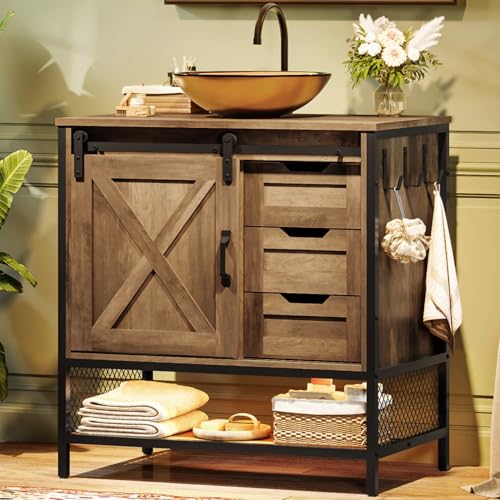


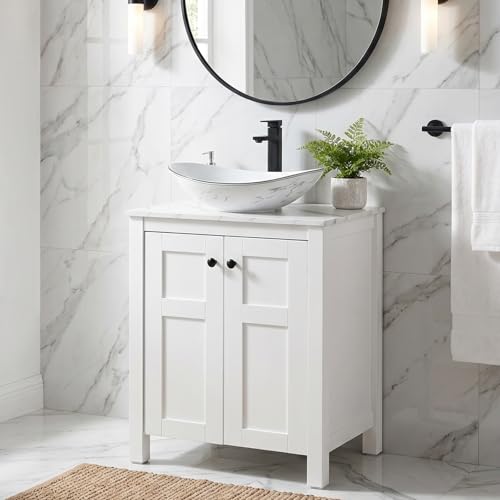
What is a Bowl Sink Vanity?
A bowl sink vanity, also known as a vessel sink vanity, features a sink basin that rests on top of the vanity countertop rather than being recessed into it. This design choice creates a distinctive, furniture-like appearance and offers several practical benefits, including easier replacement and a more customizable look. The bowl itself can be made from various materials, such as ceramic, glass, stone, or metal, allowing you to perfectly match your bathroom's aesthetic. If you're looking for a complete set, many retailers offer a bathroom vanity cabinet only, allowing you to choose your own sink and faucet.
Key Considerations Before Buying
1. Size and Layout
Bathroom space is often at a premium, so accurate measurement is critical. Bowl sink vanities come in various standard widths to fit different room sizes. For compact bathrooms or powder rooms, a 24-inch vanity with sink or an 18-inch vanity with sink is an excellent choice. If you have a larger master bathroom, a 40-inch bathroom vanity or even a double sink vanity can provide ample space for two people. For awkward corners, a corner bathroom vanity with sink maximizes every inch of space. Also, consider the depth; a narrow vanity can be a lifesaver in tight hallways.
2. Style and Design
Your vanity should complement the overall style of your bathroom. A farmhouse vanity with a rustic bowl sink creates a warm, country feel. For a sleek, contemporary look, consider a vessel sink vanity with a minimalist design. Color also plays a huge role. A brown bathroom vanity adds warmth and richness, while a black cabinet makes a bold, sophisticated statement. For a softer, brighter feel, an unpainted bathroom vanity allows you to apply your own custom finish.
3. Materials and Durability
The longevity of your vanity depends on its construction. The cabinet box is typically made from plywood, particle board, or MDF. For high-moisture bathroom environments, plywood is generally the most durable choice. The countertop is another crucial component. While vanity tops can be made of various materials, quartz and granite are popular for their durability and water resistance. You can also explore options like a 36-inch vanity top if you are replacing just the surface. The finish on your cabinets also matters; for instance, laminate cabinets offer a budget-friendly and moisture-resistant option.
4. Hardware and Finishing Touches
The right hardware can elevate the look of your vanity from ordinary to extraordinary. Bathroom vanity hardware like knobs and pulls are available in countless styles and finishes. For a modern look, consider modern cabinet pulls in brushed nickel or matte black. A black drawer pull can add a sharp, contrasting detail. Don't forget complementary accessories like a bathroom mirror with shelf or a wall-mount towel bar to complete the ensemble.
5. Budget and Cost
The price of a bathroom vanity with a bowl sink varies widely based on size, material, and brand. You can find budget-friendly options starting around $200, while high-end, custom pieces can exceed $2,500. Here's a general breakdown:
- Budget-Friendly: $200 – $600. These vanities often feature MDF or particle board construction and come with a basic ceramic sink.
- Mid-Range: $600 – $1,500. Expect solid wood or high-quality plywood cabinets, stone countertops, and designer bowl sinks.
- High-End: $1,500 – $2,500+. These are often custom or semi-custom pieces with premium materials, intricate details, and luxury sinks.
Installation and Maintenance Tips
Installing a vessel sink vanity is a manageable DIY project for those with basic plumbing skills. However, ensuring the vanity is level and securely attached to the wall is paramount. Use a cabinet pull jig for perfectly aligned hardware installation. For maintenance, clean your bowl sink regularly with a non-abrasive cleaner to prevent scratches and maintain its shine. If your vanity is in a humid environment, using a wood medicine cabinet or other moisture-resistant storage can help protect your investment.
Frequently Asked Questions (FAQ)
What is the difference between a vessel sink and a bowl sink?
They are essentially the same thing. "Vessel sink" is the industry term, while "bowl sink" is a more descriptive, colloquial term. Both refer to a sink that sits on top of the countertop.
Are bowl sink vanities hard to clean?
Not at all. In fact, they can be easier to clean because there's no rim-to-countertop crevice where grime can accumulate. You just need to clean the bowl and the countertop around it.
What is the ideal height for a vessel sink vanity?
Because the bowl adds height, standard vanity heights (32-36 inches) can feel too tall. The ideal height is one that allows you to wash your hands comfortably without bending over. You may need to lower your vanity or choose a shorter cabinet to compensate for the added height of the bowl.
Can I use any faucet with a bowl sink?
You need a faucet that is tall enough to clear the rim of the bowl. Vessel sink faucets are specifically designed for this purpose and are available in a wide range of styles to match your bathroom vanity tops.