


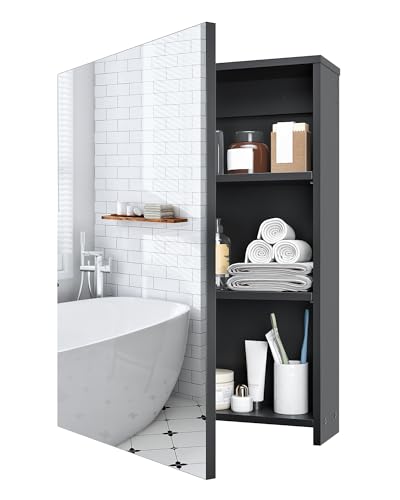


Before you buy, it helps to understand the core decisions that separate a functional mirror cabinet from one that feels like a compromise. The right choice depends on your bathroom layout, storage needs, and design preferences.
1. Mounting Type: Recessed vs. Surface-Mounted
This is the first decision you will face. A recessed medicine cabinet sits inside the wall, creating a flush, built-in look that saves space — ideal for small bathrooms. A surface-mounted cabinet attaches directly to the wall, making installation far simpler and allowing you to place it anywhere without cutting into drywall. If you are renting or want a quick upgrade, surface-mounted is the practical choice. If you are remodeling and want a seamless appearance, recessed is worth the extra effort.
For those exploring bathroom storage more broadly, our guide to bathroom cabinets covers additional options that pair well with a mirror cabinet.
2. Size and Proportions
A mirror cabinet should be proportional to your vanity. As a general rule, the mirror should be slightly narrower than the vanity countertop — typically 2 to 4 inches narrower on each side. Common widths range from 20 to 48 inches. Height matters too: standard models are 30 to 36 inches tall, but taller options work well above double vanities.
Depth is another consideration. Surface-mounted cabinets are usually 4 to 6 inches deep, while recessed models can be 3 to 5 inches deep inside the wall. Deeper cabinets hold more, but they also protrude further if surface-mounted.
3. Lighting: Integrated vs. Separate
Many modern mirror cabinets come with built-in LED lighting, which provides even illumination for grooming tasks. If your bathroom already has good overhead lighting, a non-lit mirror cabinet is perfectly fine. If you want a cleaner look without separate sconces, an integrated LED option is a smart investment.
Consider color temperature too. 3000K to 4000K is ideal for bathroom mirrors — bright enough for makeup application without feeling clinical. Dimmable options add flexibility for evening use.
4. Door Configuration and Storage
Single-door cabinets work well for narrow spaces. Double-door models are better for wider vanities and provide easier access. Some cabinets feature mirrored doors on the outside and adjustable glass shelves inside. Look for soft-close hinges if you want a premium feel — they prevent slamming and reduce wear over time.
Interior organization matters too. Adjustable shelves let you customize spacing for tall bottles or small items. Some models include built-in electrical outlets or USB ports, which are excellent for charging toothbrushes or shavers.
5. Style and Finish
Your mirror cabinet should complement your bathroom's design. Frameless mirrors offer a sleek, modern look and are easy to clean. Framed options come in wood, metal, or composite materials and can add warmth or definition. Popular finishes include brushed nickel, matte black, chrome, and white.
If you are coordinating with other fixtures, explore our guide to bath mirrors for additional inspiration on styles and placements.